Learn how to choose a mold manufacturer in Turkey. Evaluate DFM, mold design, tool life, quality control, T1 sampling, and serial production readiness.
Choosing a mold manufacturer in Turkey requires more than comparing machinery, production capabilities, and quotations. Learn how to evaluate mold design, DFM, tool life, quality control, and readiness for serial production.
Turkey has an established manufacturing base and engineering expertise serving mold requirements across a wide range of industries. However, selecting the right supplier involves more than reviewing a machine park or comparing a few quotations. A mold can be manufactured to specification without consistently producing parts that meet the required quality and performance standards.
Successful mold projects depend on several interconnected factors, including product design, application requirements, injection molding machine compatibility, sample validation, and preparation for serial production. Gaps in any of these areas can lead to additional revisions, extended lead times, unexpected costs, or difficulties achieving a stable manufacturing process.
When looking for a mold manufacturer in Turkey, the key question should not simply be, “Can this company manufacture the mold?” A more important question is: Can the manufacturer manage the engineering process required to deliver a mold that meets the product specifications and intended production conditions?
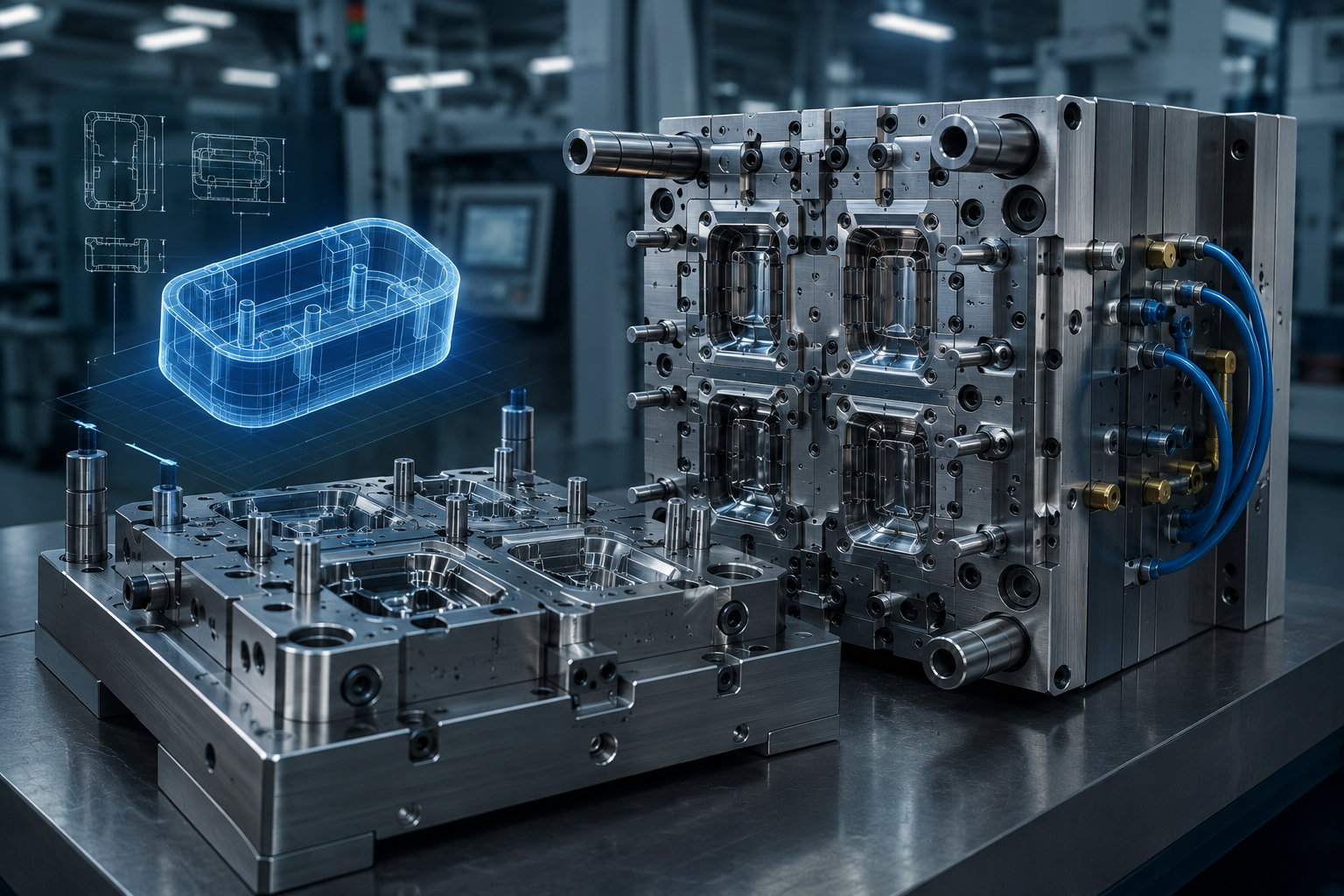
CNC machining centers, electrical discharge machining (EDM) equipment, and precision measuring instruments are important components of mold manufacturing. They enable mold components to be machined accurately, specified geometries to be produced, and critical dimensions to be inspected. However, having advanced equipment does not, by itself, guarantee a successful mold project.
Technical capability also involves design evaluation, selecting appropriate manufacturing methods, planning machining operations, and identifying potential problems before they affect production.
For example, a mold component may meet its dimensional specifications while the overall mold still struggles to achieve the required production performance. Insufficiently evaluated cooling channels, an unsuitable runner system, or an inappropriate parting and opening strategy can affect cycle time, part quality, and process stability.
Measurement and quality control are equally important. Inspection stages, acceptance criteria, critical dimensions, and procedures for handling nonconformities should be defined as part of the project planning process.
Machinery supports manufacturing capacity. Engineering expertise helps ensure that the design, tooling, and production requirements work together.
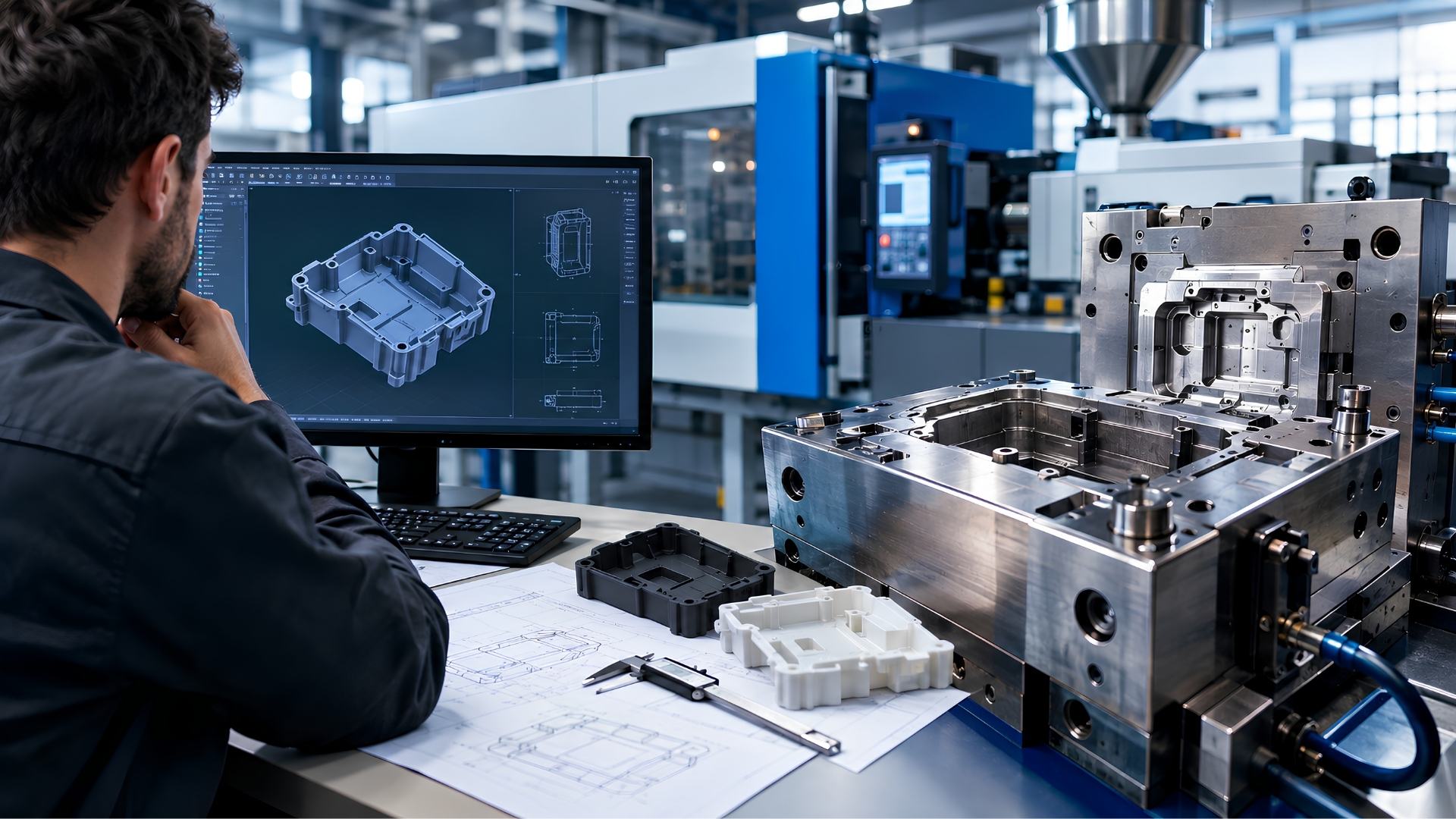
A CAD model that looks correct does not necessarily mean that a part is ready for mold manufacturing. The design must be evaluated not only for geometry but also for manufacturability, material behavior, and the conditions in which the finished part will be used.
In plastic injection mold projects, several factors need to be considered together:
If these factors are not properly evaluated, the resulting parts may experience issues such as warpage, incomplete filling, surface defects, or dimensional variation. The likelihood and severity of these issues depend on the part design, material, mold configuration, and processing conditions.
This is where Design for Manufacturing (DFM) becomes essential. DFM evaluates whether a product design can be manufactured reliably and efficiently using the intended production method. Its purpose is to identify potential manufacturing risks early, when design alternatives can still be assessed before significant tooling costs are incurred.
For example, a feature in the part geometry may complicate mold release or require a different cooling strategy. Identifying this issue before mold manufacturing begins allows the engineering team to evaluate possible solutions more efficiently. If the problem is discovered after tooling work is underway, it may require additional machining, design modifications, and changes to the project schedule.
A capable mold manufacturer should therefore do more than manufacture the geometry provided. The supplier should also be able to review the design, identify relevant risks, and provide technically justified recommendations.
Producing the first sample is an important milestone, but it does not automatically mean that a mold project is complete or ready for serial production.
The initial molded parts should be evaluated for dimensional accuracy, visual quality, functional performance, and suitability for the intended application. These criteria are related, but they are not interchangeable. A part may meet its dimensional requirements and still cause assembly difficulties or fail to perform as expected in use.
A typical validation workflow includes:
Mold manufacturing → T1 sampling → inspection and evaluation → necessary modifications → sample approval → serial production readiness
T1 refers to the first trial samples produced using a newly manufactured or modified mold. During this stage, the parts are assessed against the technical drawings and project requirements. Depending on the project, evaluation may include dimensional inspection, visual checks, assembly trials, and functional testing.
There is also an important distinction between producing one acceptable sample and demonstrating repeatable production. Before serial production, the process must be evaluated to establish whether the required part quality can be maintained under the intended manufacturing conditions.
The number of trials and modifications required will vary according to part complexity, material selection, technical requirements, and the results of each trial. What matters is that sample evaluation, acceptance criteria, and revision management are clearly defined and systematically controlled.
A mold should be evaluated not only by its condition at delivery but also by its expected performance throughout its service life.
Tool life depends on several factors, including mold steel selection, tool design, manufacturing quality, production conditions, material characteristics, and maintenance practices.
The selected mold steel should be appropriate for the expected production volume and operating environment. Mold design and machining quality can also influence wear, damage risks, and maintenance requirements. However, material selection alone cannot guarantee a specific number of molding cycles.
Maintenance planning is another important part of supplier evaluation. Cleaning, inspection of wear-prone components, and scheduled maintenance should reflect the mold’s design and operating conditions. Changes in production parameters or inadequate maintenance can affect both part quality and process stability over time.
When evaluating a mold manufacturer, ask for clear information about recommended maintenance intervals, wear components, operating requirements, and the technical documentation provided with the mold.
A supplier that considers long-term production requirements—not just initial mold delivery—can help you make a more informed tooling investment.
When comparing mold manufacturers in Turkey, using consistent evaluation criteria makes it easier to assess technical capability, project scope, and overall value.
The following questions can help structure your initial supplier assessment.
Does the supplier ask about the part’s function, operating environment, assembly requirements, critical features, and performance expectations? Understanding the application is essential to making appropriate tooling decisions.
Look for a manufacturer that can identify potential manufacturing risks, explain their implications, and recommend practical design improvements. The ability to provide engineering feedback before tooling begins can be as important as machining capability.
The mold must be suitable for the machine on which it will operate. Relevant factors include clamping force, injection capacity, mold dimensions, platen and tie-bar clearances, and the intended processing conditions.
Physical compatibility alone does not guarantee that the machine can run the mold efficiently or produce acceptable parts consistently.
Ask how T1 samples will be evaluated, which acceptance criteria will apply, how dimensional and functional results will be documented, and how necessary modifications will be managed.
A clearly defined validation process helps establish realistic expectations for project completion and production readiness.
The manufacturer should be able to explain inspection stages, responsibilities, documentation requirements, and how technical changes will be communicated and approved.
Clear communication is particularly important when the customer, mold designer, toolmaker, and production team operate at different locations.
A quotation should clearly define the work included, project assumptions, delivery scope, expected milestones, and the circumstances that may result in additional costs.
Different quotations may cover different levels of design evaluation, sampling, revisions, documentation, and technical support. These differences should be understood before comparing prices.
The lowest quotation does not necessarily represent the lowest total project cost. However, a higher price is not automatically evidence of better engineering or quality either.
A meaningful comparison considers the complete technical scope, delivery conditions, quality requirements, and intended production outcome—not just the initial tooling price.
Selecting the right mold manufacturer is more than purchasing a tooling service. The objective is to develop a mold capable of producing parts that meet the required specifications under the intended manufacturing conditions.
Companies looking for a mold manufacturer in Turkey should therefore evaluate design review capabilities, DFM expertise, mold-machine compatibility, sample validation, quality control, maintenance planning, and project communication alongside machining capacity.
At Take Craft Engineering, we approach mold projects through an engineering-led process that connects product requirements and manufacturability with mold development and manufacturing needs. Our focus is on understanding the technical requirements of each project and supporting the transition from product concept to a practical production solution.
If you are planning a new plastic injection mold project or would like to review the technical requirements of an existing project, contact Take Craft Engineering to discuss your application and production objectives.
Right Engineering, Right Production.
Website: https://www.takecraftengineering.com/kalip-uretimi/
Email: export@takecraftengineering.com
Phone: +90 312 870 1105
No. CNC machining centers and precision measuring equipment support manufacturing accuracy, but they are only part of the process. Successful mold performance also depends on mold design, cooling and runner systems, material behavior, manufacturability, validation, and process requirements.
DFM analysis helps identify potential manufacturing problems before mold steel is machined. These may include undercuts, difficult-to-release features, unsuitable wall thicknesses, and cooling or ejection challenges. Addressing such issues early can reduce the risk of expensive tooling modifications and project delays.
Not necessarily. Dimensional compliance is an important milestone, but assembly behavior, functional performance, visual quality, and process repeatability may require separate evaluation. Production readiness should be established against the project’s defined acceptance criteria.
Compare quotations by reviewing the full technical scope, including DFM or design review, mold specifications, T1 sampling, inspection, revision management, documentation, delivery terms, and after-delivery support. The lowest initial price does not necessarily result in the lowest total project cost, while a higher price alone does not prove superior quality.
Evaluate the supplier’s engineering capabilities, relevant manufacturing experience, DFM feedback, mold-machine compatibility assessment, quality control procedures, sampling and revision workflow, maintenance guidance, and communication practices. Make sure the quotation clearly defines scope, responsibilities, and delivery expectations.