How many cavities should an injection mold have?
There is no single answer.
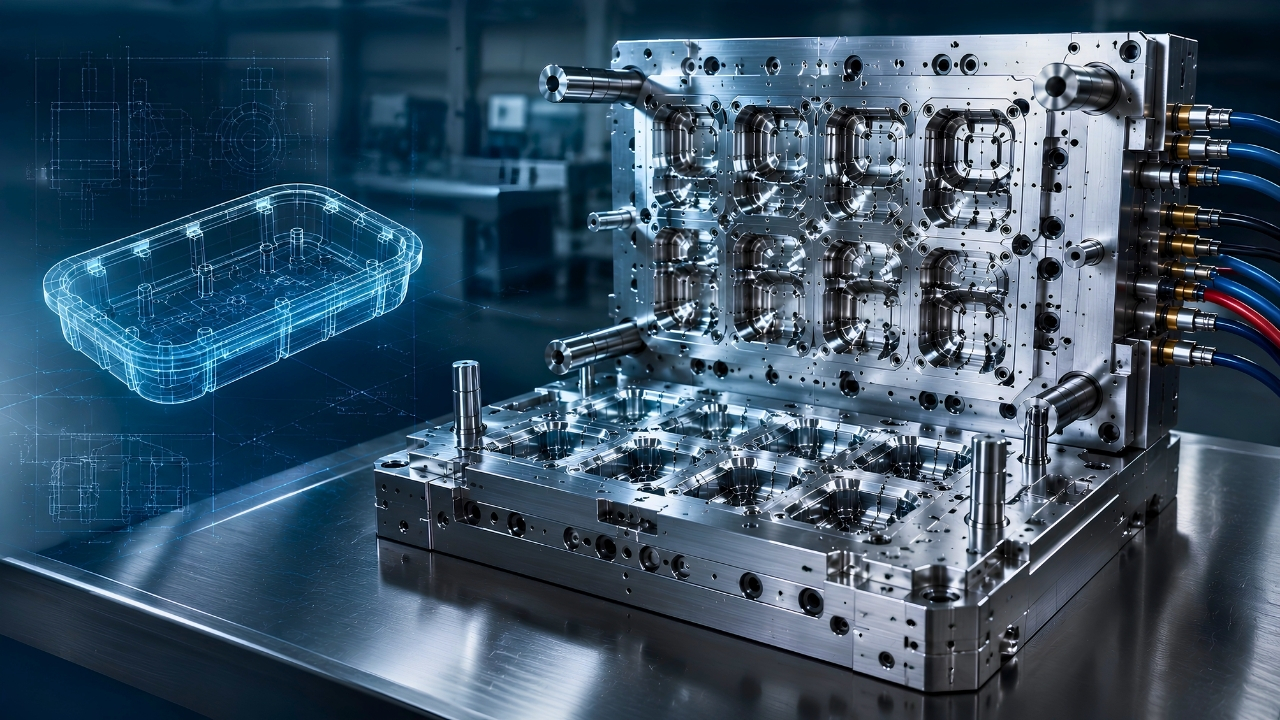
An injection mold can have 1, 2, 4, 8 or many more cavities, but choosing the right cavity count is not simply a matter of producing more parts per cycle.
The appropriate number of injection mold cavities depends on several factors, including production volume, cycle time, injection molding machine capacity, tooling investment, part cost and quality requirements.
A higher cavity count can increase output per cycle. However, it can also increase mold complexity, initial tooling cost and process control requirements.
The objective is therefore not to select the maximum possible number of cavities.
The objective is to determine the cavity count that provides the right balance between production capacity, tooling investment and long-term manufacturing cost.
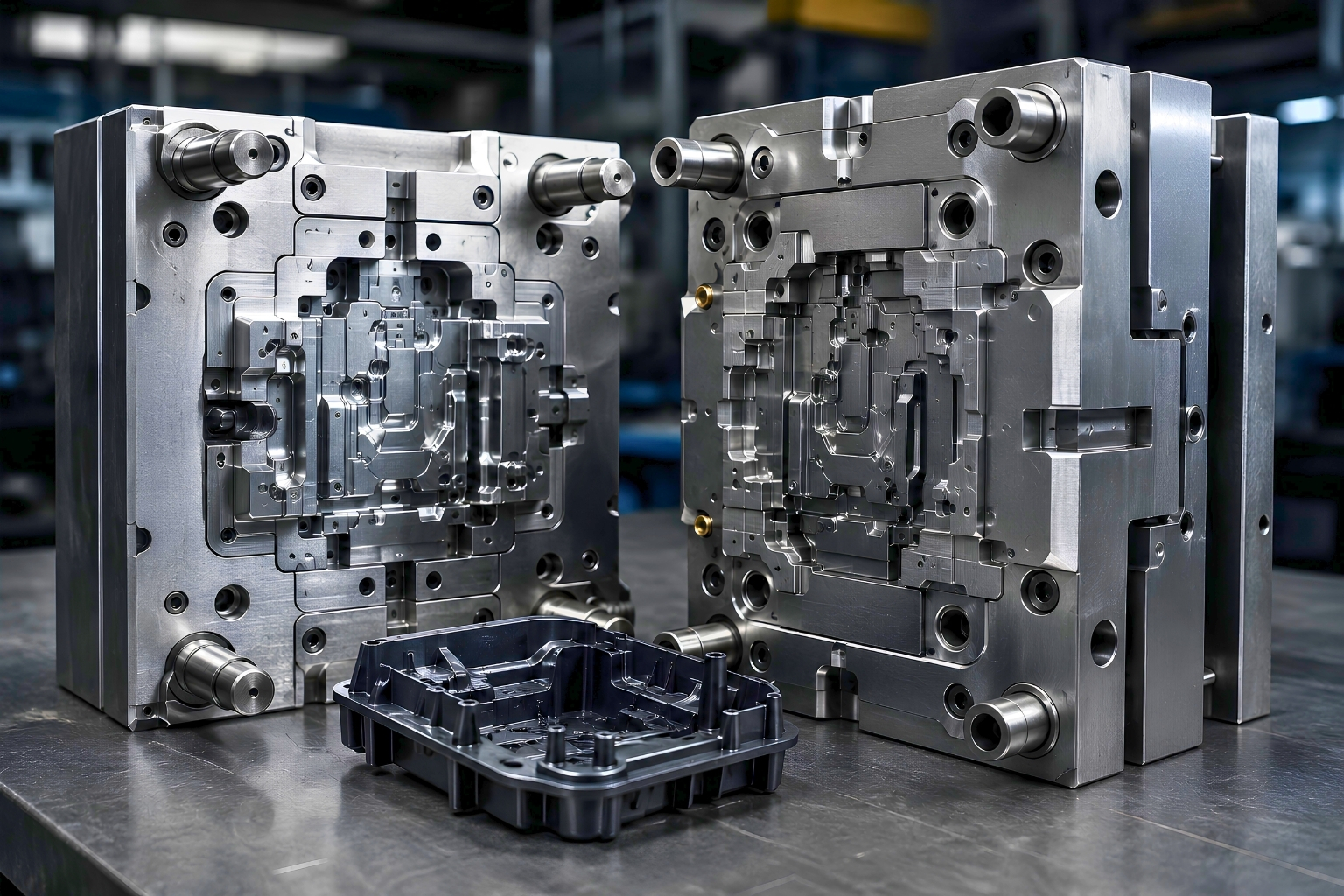
A mold cavity is the space within the injection mold that forms one plastic part during each molding cycle.
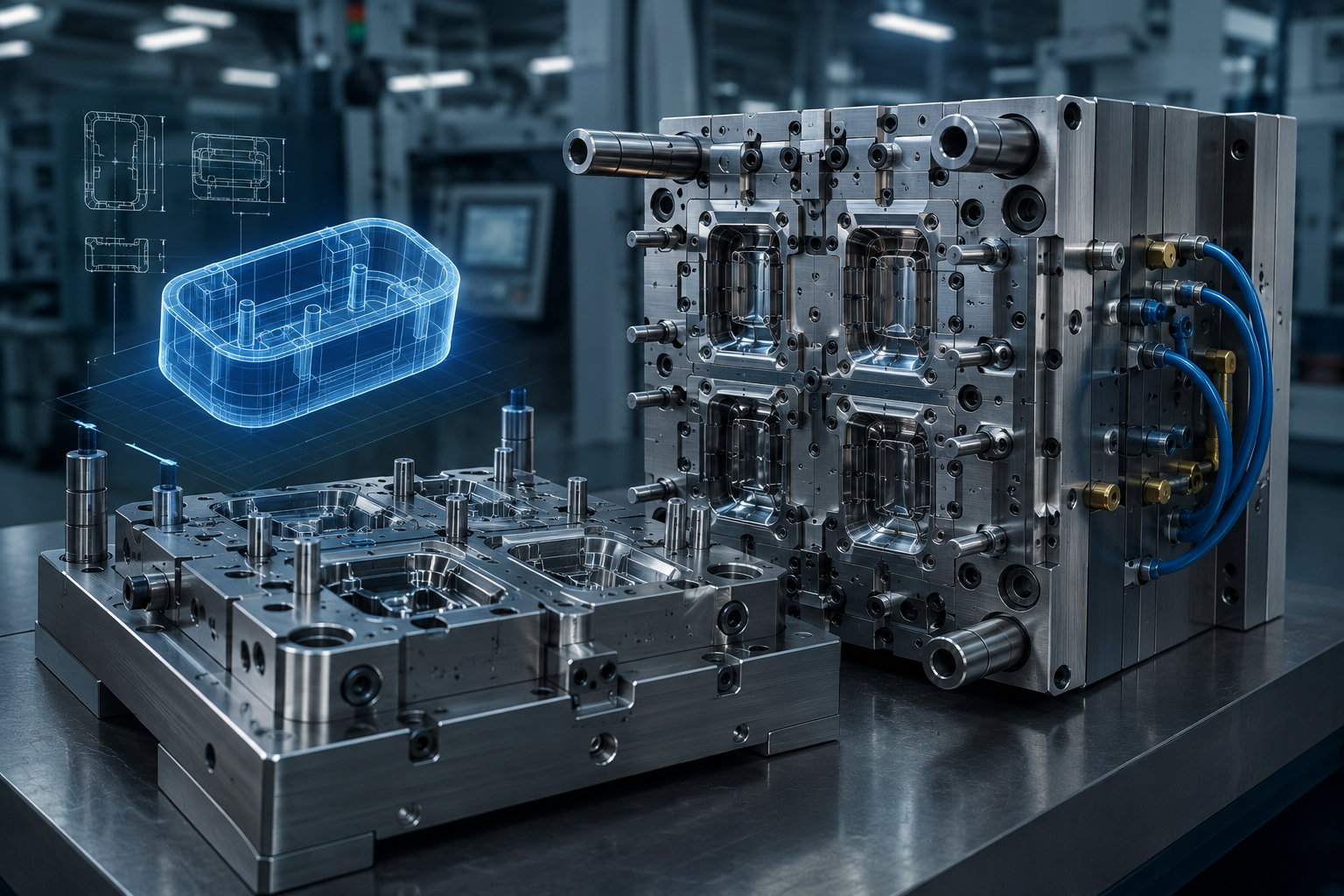
A single-cavity mold produces one part per cycle. A four-cavity mold can produce four parts per cycle under suitable production conditions.
Increasing the cavity count can therefore increase the number of parts produced within the same cycle time.
However, multi-cavity molding introduces additional engineering considerations.
As cavity count increases, factors such as filling balance, cooling performance, runner design, ejection and machine capacity become increasingly important.
For this reason, cavity count should be evaluated as part of the complete injection molding system rather than as an isolated tooling decision.
Several factors should be evaluated before deciding on the number of cavities.
Expected production volume is usually one of the first considerations.
For relatively low production volumes, a high-cavity mold may require a tooling investment that is difficult to justify.
For high and recurring production volumes, however, producing more parts per cycle can improve machine utilization and reduce the effective tooling cost per part.
The important question is not simply:
“How many parts do we need?”
It is:
“How many parts need to be produced, over what period, and at what production rate?”
This helps determine whether a single-cavity, low-cavity or multi-cavity solution makes economic sense.
Cavity count directly affects the number of parts produced per cycle, but it does not automatically determine cycle time.
Cycle time can also be influenced by:
A four-cavity mold does not necessarily produce parts twice as efficiently as a two-cavity mold if the tooling requires a longer cycle or creates additional process limitations.
The cavity decision should therefore be based on overall production capacity, not cavity count alone.
The mold must be compatible with the machine that will run it.
Important machine-related factors include:
Increasing the number of cavities generally increases the amount of material required per shot.
At the same time, the larger mold structure required for a multi-cavity tool may demand a larger machine.
This means a higher cavity count may look attractive from a production perspective but become impractical if the available machine cannot run the mold efficiently.
The better question is:
“Which cavity count can be operated efficiently and consistently on the intended injection molding machine?”
A higher cavity count can increase the initial mold investment.
More cavities may require additional:
The exact cost impact depends heavily on the part and mold concept.
For this reason, cavity count should be evaluated against the expected production volume and tool utilization rather than selected purely to maximize output.
One of the main reasons to consider a multi-cavity mold is the potential reduction in effective part cost.
If a mold produces more parts during each cycle, the machine and cycle-related costs can be distributed across more parts.
However, this does not mean:
More cavities = lower part cost.
The calculation also needs to consider:
A higher-cavity mold may be the most economical solution for a high-volume product, while a lower-cavity mold may provide better economics for a product with limited or uncertain demand.
No.
A multi-cavity mold can provide significant productivity advantages, particularly for high-volume production.
But additional cavities can also introduce:
The right decision depends on the complete production scenario.
A mold with eight cavities is not automatically a better solution than a two-cavity mold.
The appropriate solution is the one that meets the required production volume while maintaining acceptable tooling investment, quality and process stability.
Machine capacity should be evaluated early in the mold design process.
For example, increasing the number of cavities increases the total shot volume required to fill the mold.
The larger mold may also require:
A cavity count that cannot be supported by the available equipment provides no practical production advantage.
This is why cavity planning should be performed together with machine selection and production planning.
Consider a simplified example.
If a mold produces one part per cycle, 100 cycles produce approximately 100 parts.
With four cavities, the same 100 cycles can produce approximately 400 parts, assuming all cavities are filling and operating correctly.
This illustrates the basic productivity advantage of multi-cavity molding.
However, actual production efficiency depends on more than theoretical output.
If a multi-cavity mold requires longer cycles, experiences filling imbalance or produces inconsistent parts between cavities, the expected productivity advantage may be reduced.
The real target is therefore:
Stable output, not simply maximum output per cycle.
As the number of cavities increases, maintaining consistent molding conditions across all cavities becomes increasingly important.
The mold should be evaluated for factors such as:
A multi-cavity mold is successful only when the cavities can consistently produce parts that meet the required specifications.
Producing eight parts per cycle is not an advantage if two cavities consistently require correction or produce unacceptable variation.
This is why cavity balance should be considered during mold design, not only after the first production trial.
The decision can be viewed at a high level:
| Production Situation | Potentially Suitable Approach |
| Low or uncertain volume | Single or low-cavity mold |
| Moderate production volume | Balance tooling investment and output |
| High recurring volume | Multi-cavity mold may provide economic advantages |
| High machine availability | Higher cavity count may be feasible |
| Tight cavity-to-cavity consistency | More detailed filling and cooling analysis required |
This is only a starting framework.
Part geometry, material, tolerances, machine availability, cycle time and production strategy can change the final decision.
A practical evaluation should answer the following questions:
These questions help turn cavity count from a simple design preference into a production engineering decision.
At Take Craft Engineering, cavity count is not determined solely by the target production quantity.
We evaluate the relationship between:
The objective is not to maximize the number of cavities.
It is to identify the cavity strategy that is technically appropriate and economically justified for the intended production conditions.
A well-designed mold should support the required production rate while maintaining consistent part quality and manageable long-term maintenance requirements.
Choosing the right injection mold cavity count is a production engineering decision, not simply a question of how many parts can be produced per cycle.
A higher cavity count can increase output and potentially reduce the effective cost per part, but it can also increase tooling investment, machine requirements, design complexity and process control demands.
The right solution depends on the complete production picture.
The best mold is not necessarily the one with the most cavities. It is the one whose cavity strategy matches the product requirements, production volume, available equipment and long-term manufacturing objectives.
If you are developing a new plastic part or planning an injection mold investment, Take Craft Engineering can help evaluate manufacturability, cavity strategy, tooling requirements and the appropriate production approach before manufacturing begins.
🌐 www.takecraftengineering.com
📩 export@takecraftengineering.com
📞 +90 312 870 11 05
–
How many cavities should an injection mold have?
There is no universal number. The appropriate cavity count depends on production volume, cycle time, machine capacity, tooling cost and quality requirements.
Is a multi-cavity injection mold better?
Not necessarily. Multi-cavity molds can increase output per cycle, but they can also require higher tooling investment and more complex process control.
Does more cavities reduce injection molding cost?
It can, particularly in high-volume production, because more parts can be produced per cycle. However, tooling investment, machine requirements, maintenance and process stability must also be considered.
What is the difference between a single-cavity and multi-cavity mold?
A single-cavity mold produces one part per cycle, while a multi-cavity mold produces multiple parts in the same cycle. The appropriate solution depends on the production requirements.
How does cavity count affect the injection molding machine?
More cavities generally increase shot volume and may require greater injection capacity and clamping force. Mold dimensions and machine compatibility must also be considered.
What should be considered before increasing the number of cavities?
Production volume, product lifecycle, cycle time, machine capacity, tooling investment, cavity balance, quality requirements and long-term maintenance should all be evaluated.